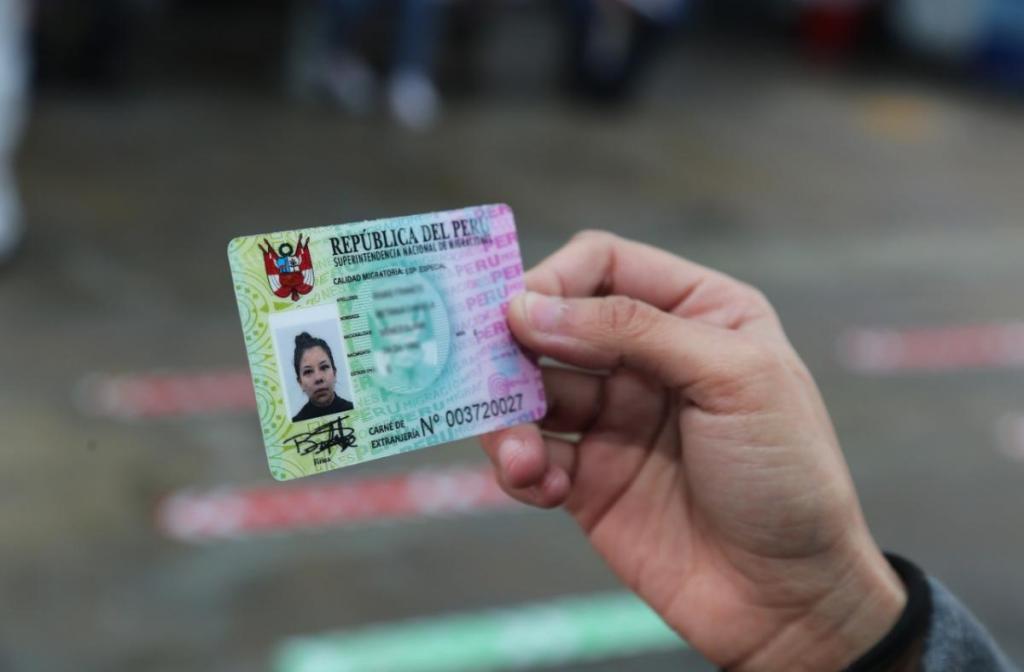
If you’re living in Peru long enough, renewing your Carnet de Extranjería is something you’ll eventually have to deal with. It’s not the most complicated process, but it’s also not as straightforward as it should be. The biggest issue is that many people don’t fully understand what they’re actually renewing.
One of the most important things to know is that your carnet and your residency are not the same thing. Your residence visa is what allows you to legally stay in Peru, and that usually expires every one or two years depending on your visa type. The carnet itself is just the physical ID card, and it typically lasts several years before it needs to be renewed.
Because of this, you almost always need to make sure your residency is still valid before renewing your carnet. If your visa has expired, renewing the card alone won’t fix anything.
When You Need to Renew
The Carnet de Extranjería is not something you renew every year like your visa. In most cases, the card itself is valid for several years, often around four years for residents, while permanent residents may have longer validity.
What really matters is that your immigration status is still valid. A residence visa is usually valid for one year. An exception applies to family visas based on marriage to a Peruvian citizen, which are normally valid for two years. If your residency has expired, renewing the carnet alone won’t fix your situation. You need to make sure your visa or residence status is up to date before dealing with the card.
You can usually renew your carnet within the 30 days before it expires. It’s best not to wait until the last minute, especially since appointments and processing times can take longer than expected.
If your carnet has already expired, you can still renew it, but you’ll likely have to pay a fine for each month it’s overdue. This is something many people don’t realize until they start the process.
In short, think of it this way: your residency keeps you legal in Peru, and your carnet is just the ID that reflects that status. Both need to be valid, but they are not renewed in the same way or on the same timeline.
What You Need
Compared to other immigration processes in Peru, this one is fairly straightforward.
You’ll need to pay the administrative fee for renewal. This is done using a specific payment code through Banco de la Nación or the págalo.pe system. The cost is relatively low, usually a little over 20 soles.
You’ll also need your current Carnet de Extranjería and valid immigration status. If you’ve renewed your passport since your carnet was issued, you may need to provide your updated passport information as well.
Unlike other processes, you typically don’t need to upload a new photo, since Migraciones takes care of that during your in-person appointment.
Step-by-Step: Requirements and How to Renew
Compared to other immigration processes in Peru, renewing your carnet is fairly simple in terms of paperwork.
You’ll need to pay the application fee through the official system. The payment is made under Migraciones using code 07561 (Formulario F-SPE-001) for the renovación de carné de extranjería. As of 2026, the fee is S/ 20.10. Make sure to keep your receipt, since you’ll need the payment details when completing your application.
You’ll also need your current Carnet de Extranjería, and it should be close to expiration, typically within 30 days. This is the window when renewal is expected to be done.
Most importantly, you must have a valid residence visa at the time of renewal. If your residency has expired, you’ll need to resolve that first before renewing your carnet. Everything is done online through the Migraciones system, which is both convenient and occasionally frustrating.
First, you pay the fee through págalo.pe or at Banco de la Nación. After that, you go to the Migraciones Agencia Digital and log in using your personal information.
Once inside, you select the option to renew your carnet and choose the Migraciones office that will handle your process. You’ll then upload your documents, which usually just means your current carnet and your payment information.
After submitting everything, you’ll receive a confirmation that your application was sent successfully. At that point, there’s nothing to do but wait.
Officially, the process is supposed to take just a few days, but in reality it often takes a couple of weeks or more.
What Happens After You Apply
Once your renewal is approved, you’ll get a notification in your Migraciones inbox (Buzon Electrónico). From there, you’ll need to book an appointment to register your biometric data.
This is the part where you go in person. They’ll take your fingerprints, your photo, and your signature. Depending on the office and the day, this can be quick or it can take a few hours, so it’s best not to plan anything else that day.
After that, you wait again while your new carnet is produced. This can take anywhere from a few days to several weeks.
Picking Up Your New Carnet
When your new card is ready, you’ll need to book another appointment to pick it up. In Lima especially, getting an appointment can be one of the most frustrating parts of the whole process. Slots fill up fast, and you may have to keep checking multiple times before you find one.
If you urgently need proof that your carnet has been renewed, there is a workaround. You can download a constancia from the Migraciones system showing that your updated carnet is valid, even if you don’t have the physical card yet.
 Peru Life Project
Leave a comment